
Big Tech companies continue to hit new high scores with respect to their greenhouse gas emissions (GHG). Despite the climate pledge Microsoft made in 2020 to be carbon-neutral by 2030, the company’s latest sustainability report shows that the company’s GHG emissions exceeded 21 million metric tons in fiscal year 2025, up 27 percent from the year before.
It’s the same story for Google. The company’s latest environmental report noted that emissions rose 18 percent compared to the prior year, reaching 18.8 million metric tons of CO2-equivalent emissions.
For those keeping score, that means Microsoft and Google now emit more greenhouse gases than entire states, and the real emissions numbers are even higher than the headline numbers reported by the Tech Giants in the mainstream press.
The State of Emissions
Big Tech’s soaring emissions mostly stem from building AI data centers and powering them with skyrocketing quantities of natural-gas-fired electricity. Natural gas is the preferred fuel because data centers need constant power, 24-7, 365 days a year, that unreliable wind and solar resources simply cannot provide.
Google and Microsoft’s emissions are rising so quickly that they are surpassing entire states on the greenhouse gas scoreboard.
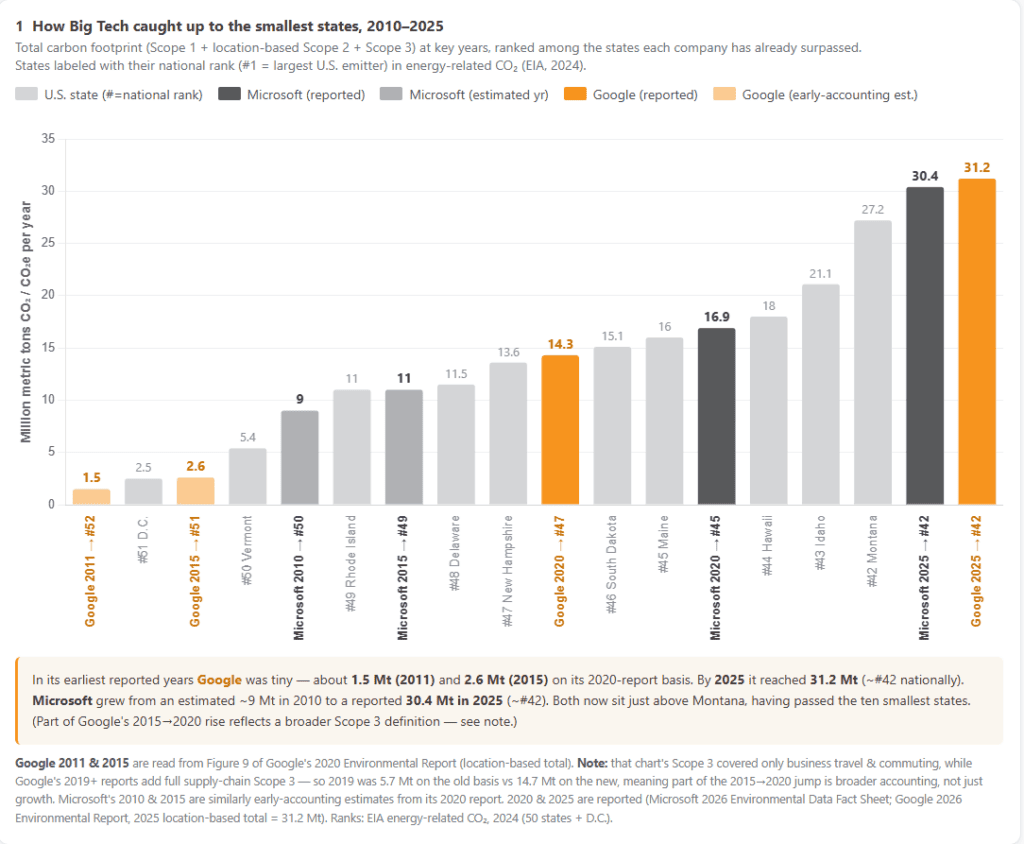
The graph below shows emissions for the two companies, compared with carbon dioxide emissions data for coal, oil, and natural gas in each state from 2024, obtained from the U.S. Energy Information Administration (EIA).
In 2010, Google would have been the smallest-emitting state in the nation, and Microsoft would have been the 49th-largest emitter, just ahead of Vermont. The trend was essentially flat from 2010 to 2015, but by 2025, both Google and Microsoft had leapfrogged Idaho and Montana to become tied for the 42nd-largest emitter in the Union.
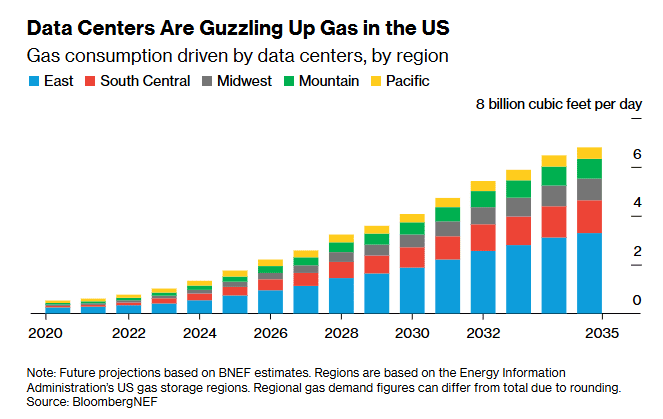
Bloomberg estimates suggest that data centers could triple their natural gas consumption for electricity generation by 2035, increasing associated emissions and signaling that the rising trend shows no signs of slowing.
If the current emissions trends for these companies hold, which we acknowledge is rife with uncertainty when projecting several years into the future in a rapidly evolving industry, Microsoft and Google would be the 34th and 30th largest emitting states in 2030, respectively, and 16th and 13th in the ranks by 2035.
In other words, Google would emit more greenhouse gases than 38 states, and Microsoft would emit more than 35.
How the Emissions Are Calculated
Readers may have noted a discrepancy between the emissions reported by Microsoft and Google at the beginning of this article and the numbers used in the graphs. The difference stems from how certain emissions are counted and discounted.
Corporate reports typically report emissions in three broad categories, or scopes, shown in the table from Microsoft’s 2026 sustainability data sheet below.
- Scope 1 covers direct emissions from sources Microsoft owns or controls, including on-site fuel combustion, backup generators, vehicle fleets, and refrigerants used at its facilities.
- Scope 2 covers indirect emissions from purchased energy, especially electricity, steam, heating, and cooling used to operate Microsoft’s offices and data centers.
- Scope 3 essentially covers emissions associated with building data centers, but the category technically covers emissions from Microsoft’s broader value chain, including purchased goods and services, capital goods, fuel- and energy-related activities, transportation, business travel, employee commuting, use of sold products, and end-of-life treatment of sold products.
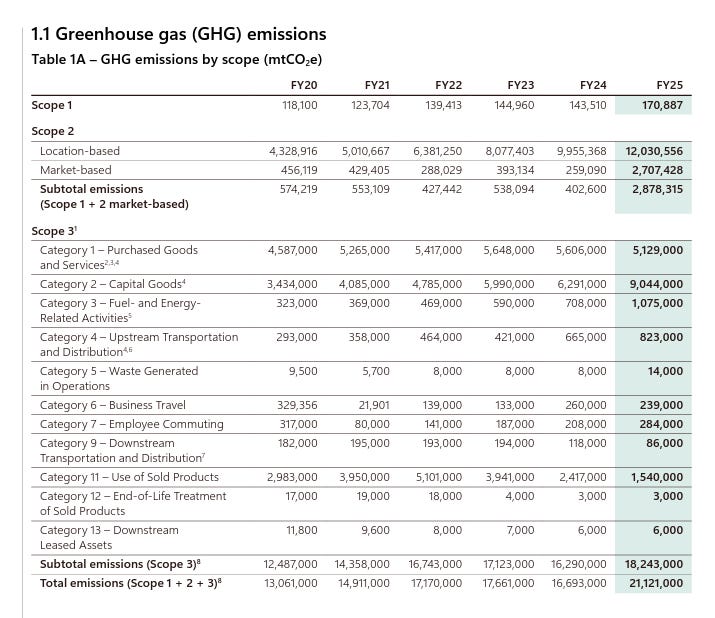
The sticky wicket is Scope 2 emissions because there are two main ways that companies publicize them, as shown in the table above.
The first is market-based Scope 2 emissions, which is the number companies usually prefer to emphasize. This method presents the company’s electricity-related emissions after reducing the total by accounting for purchases like renewable energy certificates and power purchase agreements from wind and solar facilities.
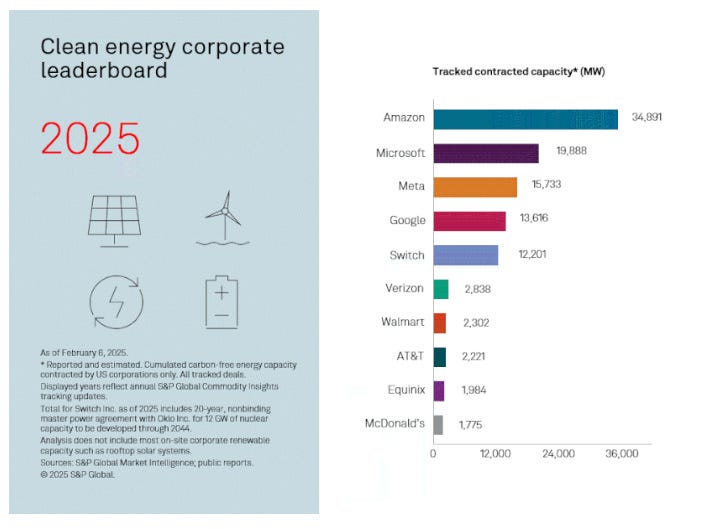
These purchases are massive. S&P Global reports that Microsoft and Google’s cumulative power purchase agreements accounted for 33,500 MW of capacity in 2025, the equivalent of 20 percent of the wind currently installed in the United States.
The second method for calculating Scope 2 emissions is the location-based method. Location-based Scope 2 estimates are based on the actual electricity grids where the company consumes power and are calculated using the regional grid’s emissions rate for the company’s electricity use.
The difference between these two methods is massive. For example, Microsoft reported 2.7 million metric tons of market-based Scope 2 emissions, but 12.0 million metric tons of location-based Scope 2 emissions in fiscal year 2025. This means Microsoft’s “market-based” emissions look four times smaller than the actual emissions associated with using grid electricity when measured with the location-based method.
Promises Made. Promises…Revised
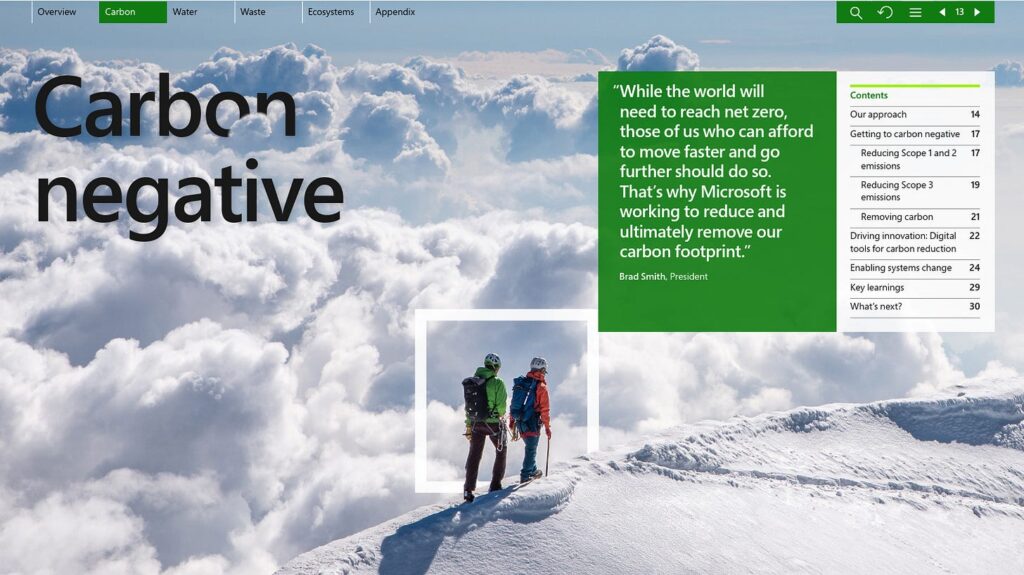
The rise in carbon dioxide emissions from Google and Microsoft is ironic, given the major climate pledges the companies announced in 2020.
In 2020, Microsoft declared it would be carbon-negative by 2030, and the 2020 Sustainability Report was rife with platitudes about the company removing all the carbon it has emitted, either directly or through electricity consumption, since it was founded in 1975, by 2050.
Google’s pledges were even more aggressive. In September of 2020, the company announced it would use 24/7 carbon-free electricity by 2030. Instead, the company’s emissions have risen by 82 percent since 2019, when it emitted just 10.33 million metric tons.
The obvious writing on the wall has caused both Microsoft and, to a lesser extent, Google to reconsider their increasingly unrealistic climate pledges.
Bloomberg reported in May that Microsoft is in discussions to “shelve one of the industry’s most ambitious clean energy targets” by delaying or abandoning its 2030 target of matching 100 percent of its hourly electricity use with renewable energy purchases.
In April, Cleanview reported that Google is linked to a new 933-megawatt (MW) natural gas facility in Texas that will not use carbon capture and sequestration (CCS) equipment. Google also plans to purchase electricity from natural gas plants in Illinois and Nebraska that will allegedly have CCS equipment, but the technology remains strictly in the “prove-it” stage of its deployment.
Conclusion
Despite their climate pledges, Big Tech companies are on track to become the largest emitting states in the nation due to the insatiable demand for electricity to power data centers. However, Big Tech’s willingness to increase its emissions to build out AI raises real questions about the sincerity of those commitments in the first place.
A version of this piece was also published by Isaac Orr and Mitch Rolling at Energy Bad Boys on Substack.