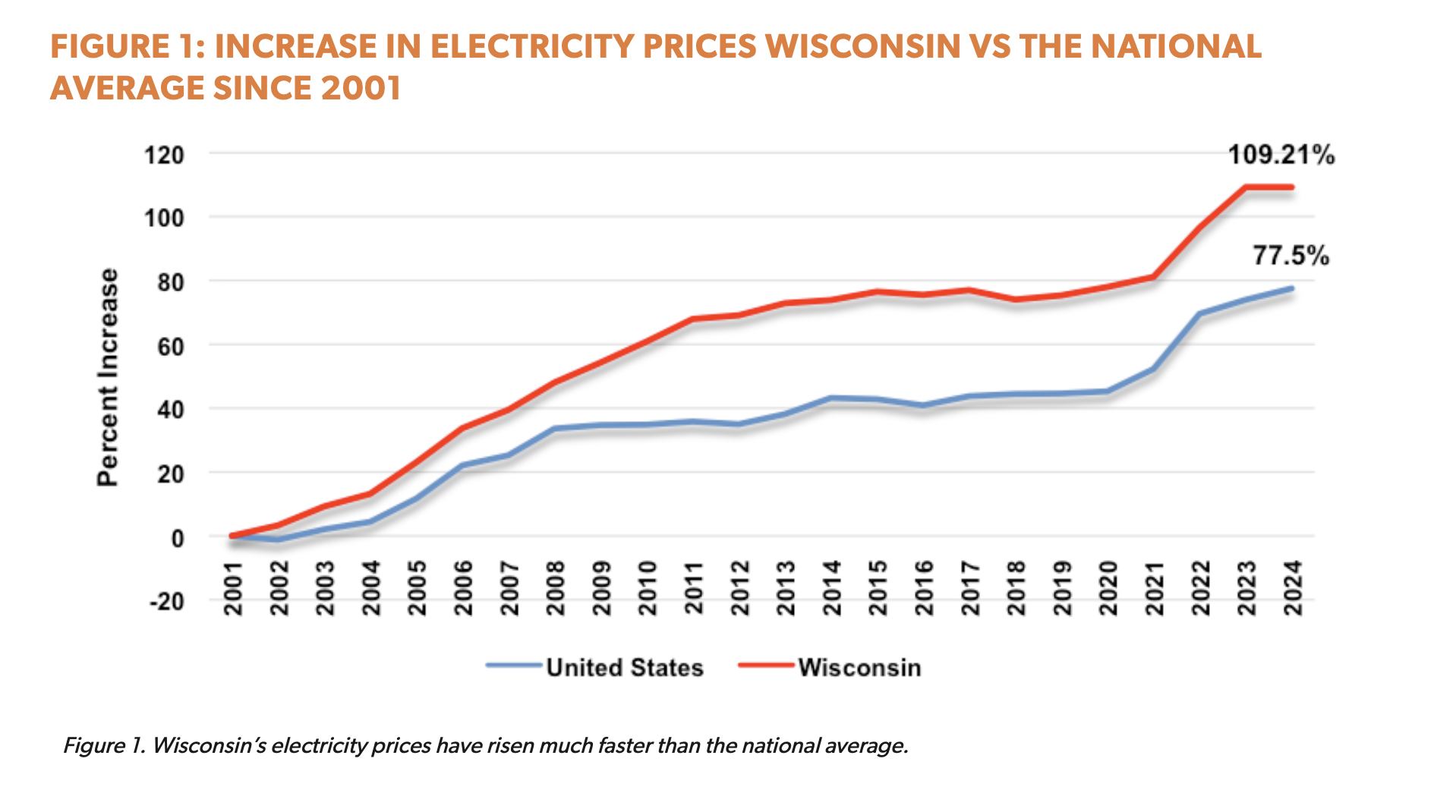
This is a business killer: “Wisconsin’s electricity prices are…regionally uncompetitive.” Since 2001, Wisconsin’s rate increases have significantly outpaced national rate increases. Part of the problem is that Wisconsin utilities are forcing their ratepayers to pay over $1 billion for coal assets they can’t use to generate power. While those coal plants sit idle, Wisconsin ratepayers will have to pay over $28 billion for new natural gas, wind, solar, and batteries. The result is that Wisconsin residents are staring down an electricity affordability crisis in the making.
Check out AOER’s issue brief on Wisconsin’s looming affordability crisis.
The latest from AOER’s Isaac Orr and Mitch Rolling, aka The Energy Bad Boys:
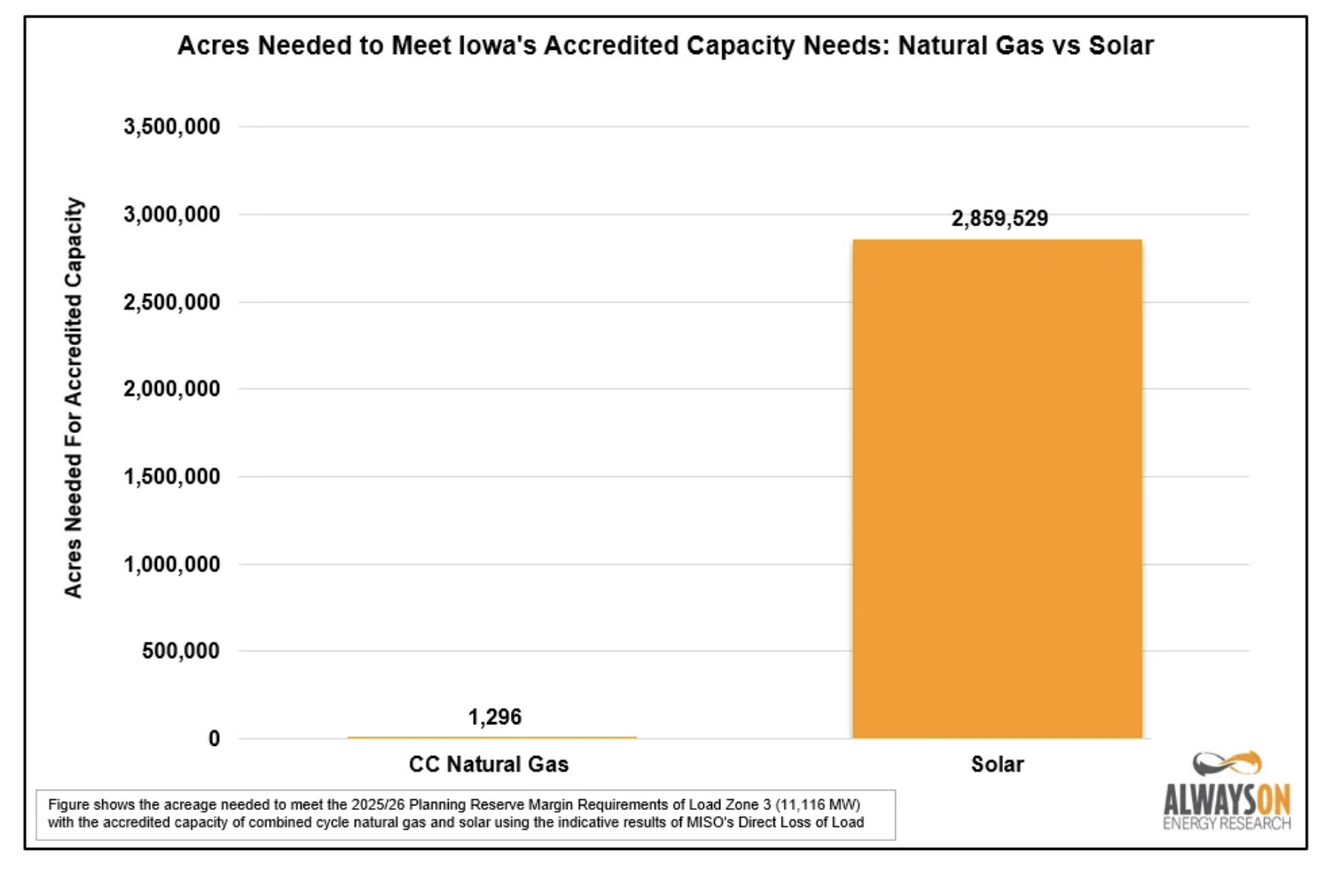
Utility scale solar is a land hog. Isaac and Mitch show that solar power’s land requirements are far more severe when taken through the lens of capacity value rather than simple energy production. This is important:
Most public discussions about solar focus on energy production, but power systems are built around reliability during peak demand. Once you look at the grid through the lens of accredited capacity—that is, capacity that can be relied upon during peak demand—instead of annual energy, the land requirements for different technologies look radically different.
This is the energy vs. capacity distinction that most solar land-use debates miss.
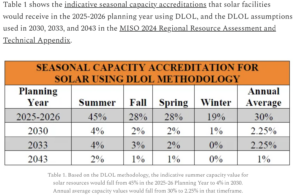
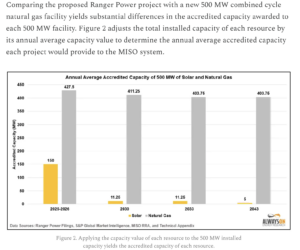
Using MISO’s new Direct Loss of Load (DLOL) accreditation methodology, the Boys demonstrate that solar’s capacity value will plummet from 30% in 2025-2026 to a mere 2.25% by 2030. At the same time, natural gas maintains an 82% capacity value.
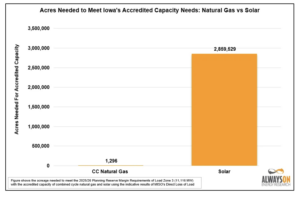
This means that matching the accredited capacity of a single 500 MW natural gas plant on 58 acres would require over 105,000 acres of solar panels in 2030. That’s roughly 29% of all land in Cerro Gordo County, Iowa. Meeting Iowa’s peak capacity needs with solar would gobble up 8% of the state’s total landmass, 2,207 times more land than an equivalent natural gas buildout.
There’s a real project—the River City Energy Project—that AOER analyzed. The proposed 500 MW solar facility from Ranger Power in Cerro Gordo County, Iowa, would consume 2,894 acres of mostly farmland. At the request of Cerro Gordo County, we provided expert witness testimony in the utility docket. Cerro Gordo County is home to picturesque Clear Lake, in north central Iowa.
Our testimony highlighted how MISO’s shift from ELCC (Effective Load Carrying Capacity) to DLOL appropriately reduces solar’s value as a reliability resource. This change will have critical implications for utility planning and land use decisions across MISO’s territory. And we have the charts and data to prove it.
Claims that wind and solar are the cheapest path to decarbonization rely on the flawed LCOE and exclude reliability costs. That’s why AOER created the Always On LCOE. When the AOER team accounts for the total system costs (Always On LCOE) of wind and solar energy, including backup generation, storage, transmission, and overbuilding required to meet peak demand, the economics change dramatically.
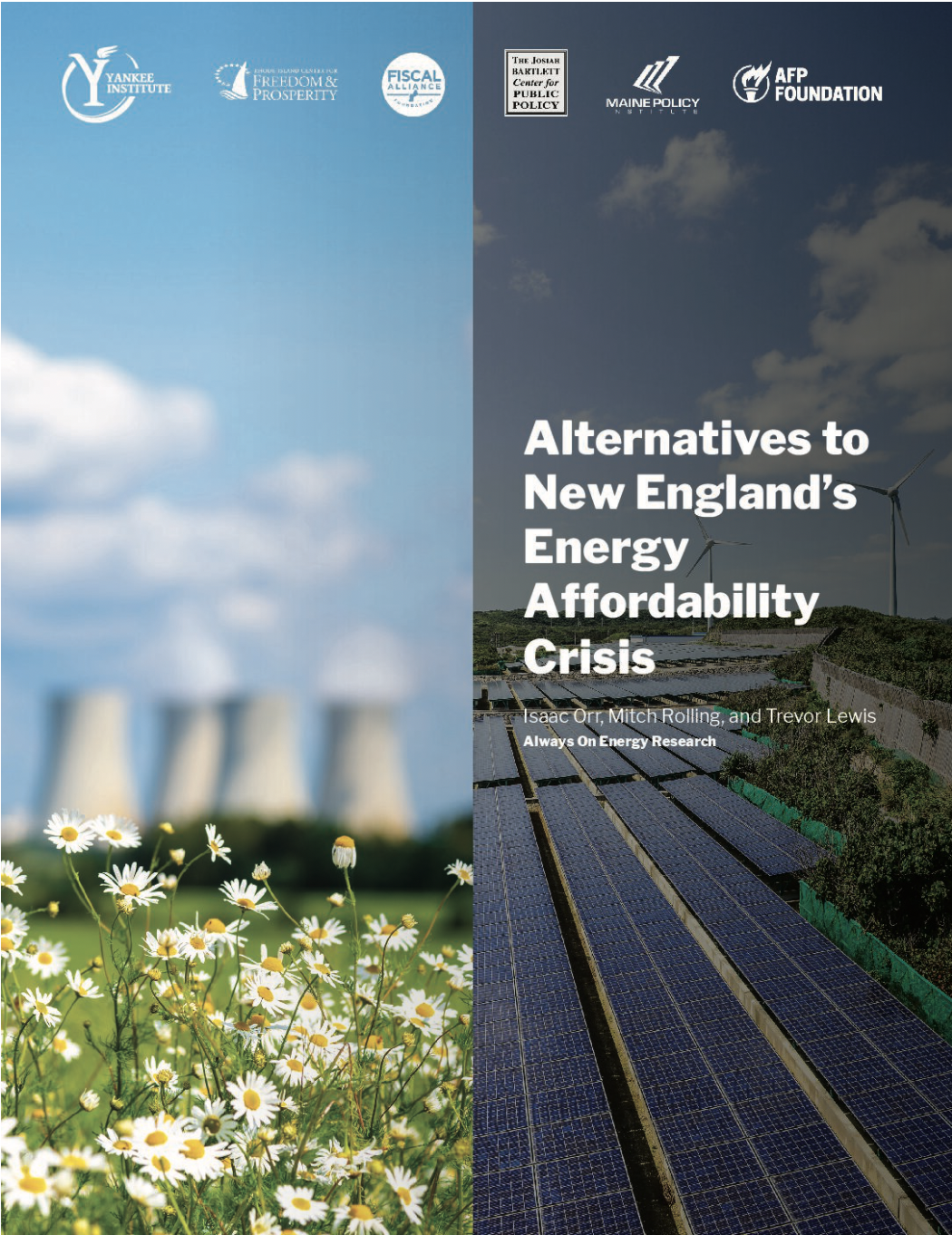
Our latest report on New England’s power system illustrates this point. Net Zero policies that prioritize wind and solar are more fragile and more expensive than policies that rely on nuclear and natural gas. Here’s what we found in Alternatives to New England’s Energy Affordability Crisis:
- When AOER models the Always On LCOE of New England’s decarbonization policies, “cheap” wind and solar soar to $815 billion through 2050.
- Alternatives provide massive savings
- A nuclear-only pathway would cost roughly $415 billion, cutting emissions by over 90 percent.
- A nuclear-plus-natural gas portfolio would save more than $600 billion and provide a 50 percent reduction in GHG emissions.
- Alternatives avoid blackouts that wind and solar cannot.
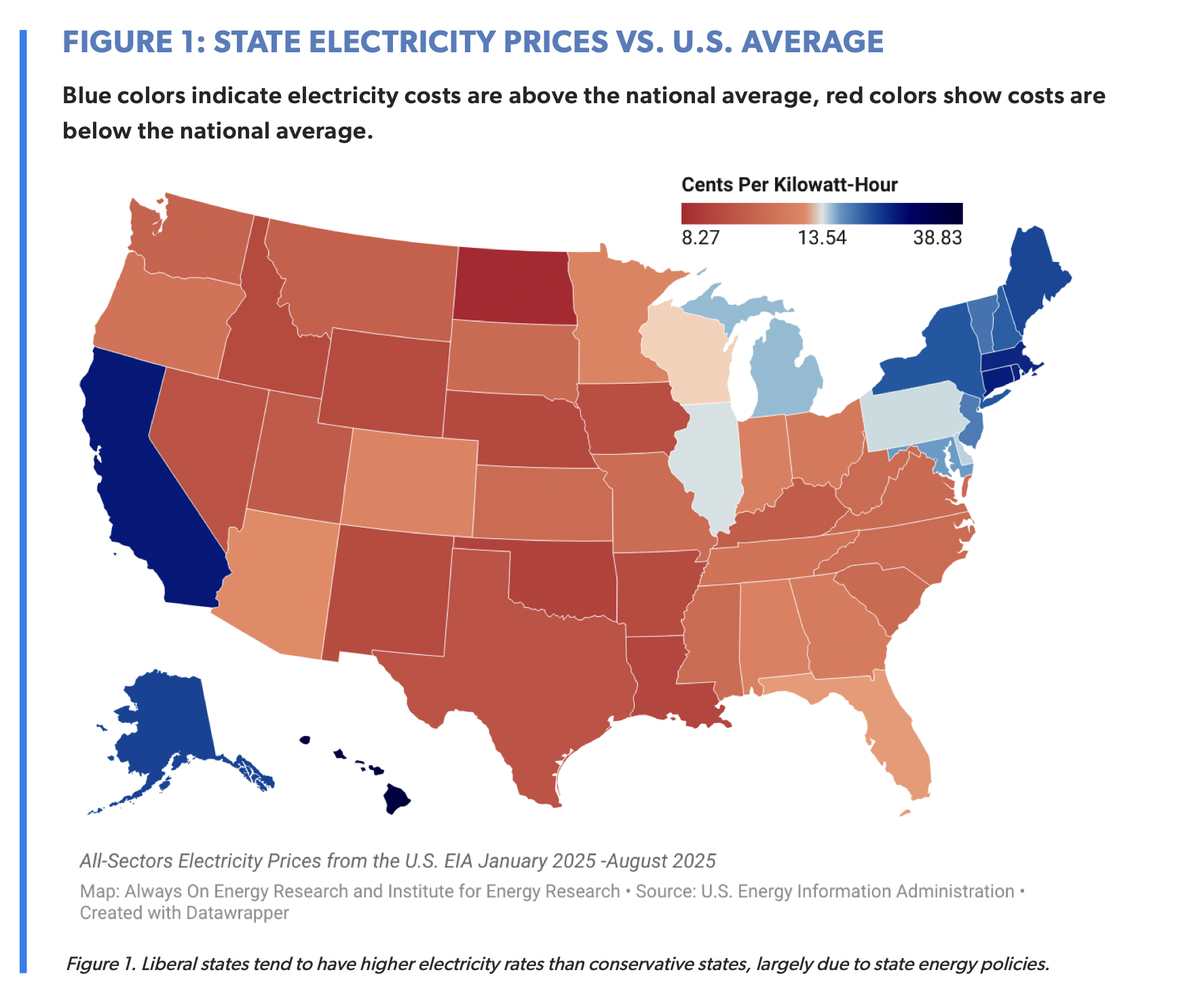
Electricity affordability is not an accident of geography or markets. It’s a function of deliberate state policy choices that influence generation portfolios, infrastructure decisions, and regulatory mandates.
Our Blue States, High Rates study, co-authored with the Institute for Energy Research (IER), shows how state-level energy policy choices drive electricity prices across the United States. Our research finds that 86 percent of states with electricity prices above the national average are reliably Democratic (“blue”) states. In comparison, 80 percent of the states with the lowest electricity prices are reliably Republican (“red”).
Higher costs in blue states are linked to aggressive renewable and carbon-free mandates, clean energy standards, net-metering policies, premature retirements of dispatchable generation, and restrictions on natural gas infrastructure. All of these increase costs for households and businesses. By contrast, many red states prioritize affordable, dispatchable generation and avoid costly mandates, resulting in lower average electricity rates for consumers. The study highlights California, New York, Florida, Louisiana, and Kentucky as exemplars of how contrasting policy frameworks affect affordability and reliability.
We advanced the Blue States, High Rates theme in two opinion editorials.
- Mitch and Isaac pose this question to The Hill readers: “If Democrat policies make energy affordable, why are they backtracking from them?” Blue States, High Rates explains why.
- Isaac and co-author Tom Pyle from IER write in Real Clear Energy that high electricity prices are a choice that blue states make every day.
National Review cited our work in an article highlighting the left’s “hypocrisy problem with energy and affordability,” noting that the left’s rhetoric about lowering costs contrasts with observed price outcomes in states with aggressive clean energy mandates
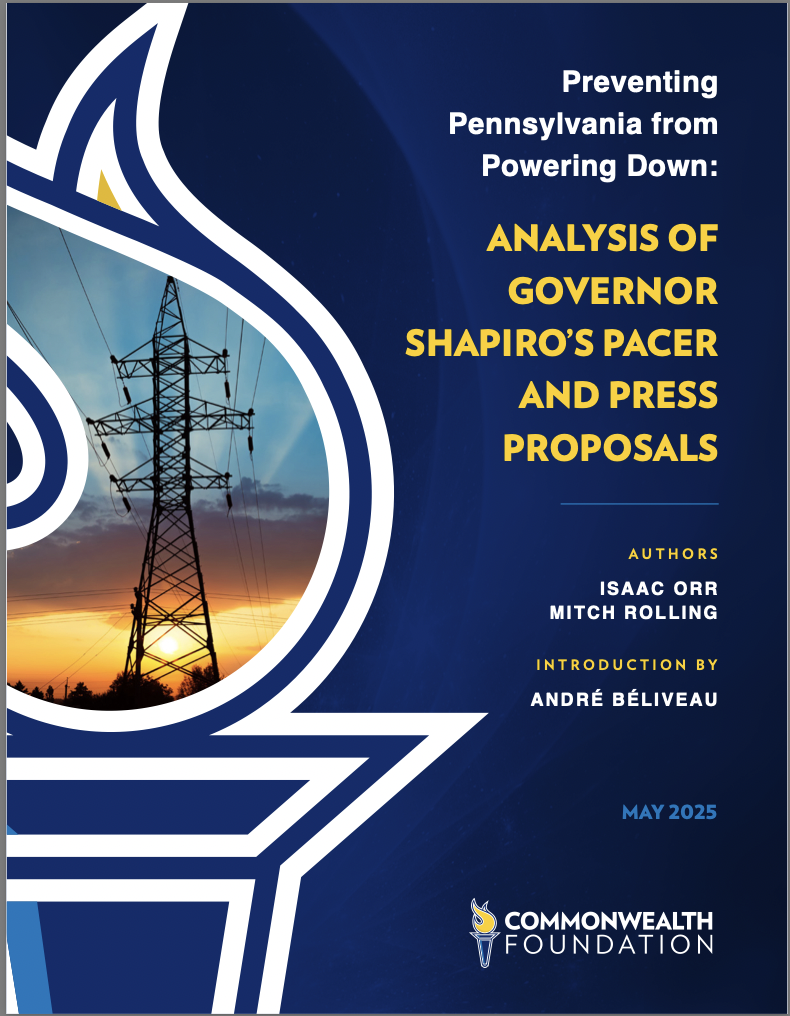
AOER co-founders Isaac Orr and Mitch Rolling authored a report, Preventing Pennsylvania from Powering Down: An Analysis of Governor Shapiro’s PACER and PRESS Proposals, commissioned by the Commonwealth Foundation. The study examines the projected cost and reliability impacts of Democrat Governor Josh Shapiro’s two signature climate initiatives: the Pennsylvania Climate Emissions Reduction Act (PACER) and the Pennsylvania Reliable Energy Sustainability Standard (PRESS).
Despite campaigning on a healthy skepticism of the Regional Greenhouse Gas Initiative (RGGI), a multistate cap-and-trade carbon tax, Shapiro introduced PACER to establish a state-specific version of RGGI. It would set strict carbon emissions limits for thermal power plants and charge a fee for each ton of emissions. At the same time, PRESS would greatly expand Pennsylvania’s portfolio of alternative, intermittent energy generation.
Together, PACER and PRESS would significantly raise electricity costs while increasing the grid’s reliance on unreliable, weather-dependent resources. AOER’s proprietary modeling shows that if enacted, PACER and PRESS would add $157 billion in electricity costs by 2035, pushing average rates 60 percent higher, from 12.6 cents per kWh to 20.2 cents per kWh. Household bills would more than double, increasing $1,754 annually, while commercial and industrial consumers would face even steeper cost hikes.
The consequences would extend far beyond Pennsylvania. As the third-largest electricity producer in the nation and its largest exporter, Pennsylvania currently supplies about 35 percent of the power it generates to other states. Its diverse fleet of natural gas, nuclear, and coal plants plays an indispensable role in maintaining reliability across the Eastern Interconnection. Weakening that fleet through policies like PACER, PRESS, and RGGI would ripple across regional grids—raising costs, reducing reliability, and undermining one of America’s most important states for affordable, dependable energy.
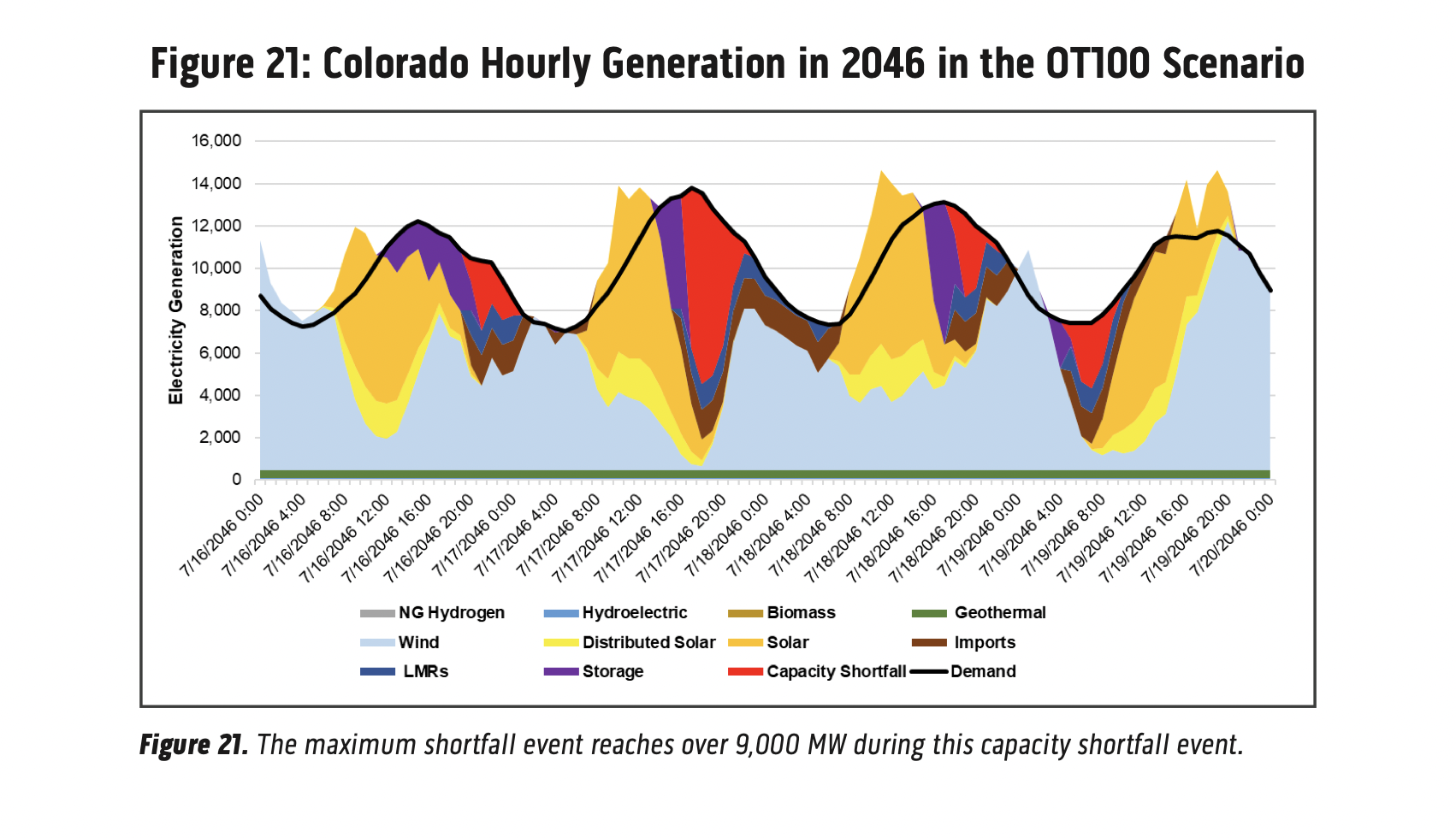
The Independence Institute released Colorado’s Green Hydrogen Boondoggle, authored by AOER’s Isaac Orr and Mitch Rolling. The paper stress-tests Colorado Energy Office’s Ascend Analytics’ “Optimized 100” (OT100) scenario, a 2040 zero-emissions path that leans on wind/solar, 12-hour batteries, and “green hydrogen,” against real-world costs and reliability. The verdict: OT100 is too expensive, and it breaks the grid.
Key findings
- Cost blowout: OT100 adds $114.3B through 2040 (or $56.6B discounted at 6%). Ascend undercounts transmission and relies on optimistic capital expenditures and hydrogen assumptions.
- Rate shock: Average prices more than double to 27.94¢/kWh by 2040.
- Reliability failure: OT100 leads to blackouts as early as 2040, with later events lasting up to 66 hours.
- Workable alternatives: A Natural Gas path meets load with $9.5 billion added cost through 2040 and no blackouts. A portfolio that includes nuclear cuts emissions ~90% with a $37 billion price tag through 2040 and no blackouts.
Why the gap? System costs that glossy LCOE charts ignore—overbuild, long-distance transmission, balancing/backup, and much higher hydrogen utilization than assumed—drive OT100’s price tag and outages. In practice, you’re paying for a vast new system that still can’t keep the lights on during wind/solar droughts.
Bottom line: Colorado can deeply decarbonize and keep power affordable and reliable—but not with OT100.

Comments Support CPS Repeal
The repeal of the Environmental Protection Agency’s (EPA) greenhouse gas emissions standards for fossil fuel-fired electric generating facilities marks a pivotal moment in federal energy policy. In recent comments filed with the EPA, Always On Energy Research (AOER) provided detailed modeling that quantifies the risks posed by these rules and demonstrates the economic and reliability benefits of repeal. Our analysis underscores a simple but critical point: durable energy policy must rest on lawful authority, proven technology, and a commitment to affordability and reliability—not on aspirational mandates that jeopardize both consumers and the grid.
The Biden administration built its Carbon Pollution Standards (CPS) on a faulty foundation. EPA’s own modeling assumed away the true cost of compliance by hiding 90 percent of the price tag in a “baseline” scenario propped up by perpetual subsidies and unrealistic assumptions about wind and solar deployment. The reality is that scenario would produce rolling blackouts across the Midwest, including a modeled 20 percent loss of power during a hot July week in 2040. Families and businesses in MISO—Midcontinent Independent System Operator serving 45 million Americans—could face $2.6 billion in blackout damages in a single year.
By contrast, the Trump administration’s proposal to repeal these rules restores balance and reliability. AOER’s analysis shows that keeping affordable, dispatchable resources like coal and nuclear online, while allowing new natural gas to be built, saves ratepayers more than $560 billion through 2055 and avoids 8.8 million megawatt hours of blackouts valued at $53.6 billion. Even after accounting for EPA’s estimates of increased criteria pollutants, the net benefit to consumers in the MISO region alone is $314.6 billion. In short, repeal means Americans can count on the lights staying on and their bills staying affordable.
Prime Mover Institute
The Prime Mover Institute, a new public interest legal organization, cited AOER in its comments and included our comments as an attachment. PMI emphasizes that EPA has overstepped its statutory authority under the Clean Air Act by attempting to regulate greenhouse gases without a proper pollutant- and source-specific finding.
PMI argues that Section 111 was never intended to serve as a vehicle for global climate regulation, and that the Major Questions Doctrine, reinforced by the Supreme Court in West Virginia v. EPA, bars such sweeping action absent clear congressional authorization. PMI further notes that Congress provided narrow international air pollution authority under Section 115, but that provision also cannot justify EPA’s approach
PMI also underscores the grid reliability consequences of the Biden Carbon Pollution Standards, highlighting AOER’s modeling of blackouts and massive hidden costs in MISO as proof that EPA’s assumptions were not just unrealistic, but dangerous. By placing these issues squarely within a legal and constitutional framework, PMI provides a powerful complement to AOER’s economic and reliability modeling.
Fun Fact: We’re Good!
Six additional groups cited AOER studies in their comments. Two groups also cited Mitch and Isaac, and one cited Amy.

Is it time for a fair tax for wind and solar in Wyoming?
A new AOER study, Balancing the Scales: How Wyoming Can Protect Its Energy Revenues, commissioned by the Wyoming Liberty Group, reveals a striking imbalance in how Wyoming taxes its energy producers. While coal, oil, and natural gas shoulder the vast majority of the state’s energy tax burden, intermittent energy sources like wind and solar pay disproportionately little, or in the case of utility-scale solar, nothing at all. With fossil fuel revenues projected to decline by $171 million by 2030 and $621 million by 2040, our report outlines how modest tax reforms on wind and solar could help fill the growing budget gap without sacrificing energy development.
The Wyoming Liberty Group presents two primary paths forward. First, replacing the current $1 per megawatt-hour (MWh) wind excise tax with a 9 percent royalty tax on wind and solar could generate $60 million annually by 2030 and as much as $1.4 billion by 2040. Alternatively, simply increasing the wind tax to $5/MWh could yield over $1 billion in new revenues over the next 15 years, while extending the same tax to solar energy would raise an additional $87 million. These funds could be used to support schools, roads, and property tax relief for Wyoming families, while restoring tax parity across all energy resources.
The message is clear: taxing industrial-scale wind and solar at levels comparable to those of fossil fuels is both fair and fiscally prudent, especially considering the favorable treatment wind and solar have received at the federal level over the last four decades. With energy revenues in flux, now is the time for Wyoming to balance the tax scales.
In our most recent research study, The High Cost of the APS Plan to Go Net Zero, AOER evaluated Arizona Public Service’s (APS) plan to achieve “Net Zero” emissions by 2050. The study, commissioned by Arizona Free Enterprise Club and the AZ Liberty Network, projects that APS’s Net Zero plan would necessitate an investment of at least $42.7 billion by 2038, potentially increasing residential electricity bills by approximately $100 monthly and commercial bills by about $454 per month.
The plan involves significantly expanding grid capacity from the current 10 GW to 27 GW to accommodate intermittent renewable sources like wind and solar. Despite this expansion, the analysis indicates a possible capacity shortfall of up to 3,701 MW by 2038, which could affect about one-third of customer demand and lead to rolling blackouts. An alternative scenario focusing on reliable, dispatchable power sources could save ratepayers over $20 billion. The study reveals that APS’s current approach is being done voluntarily without direction from the state legislature or the Arizona Corporation Commission.
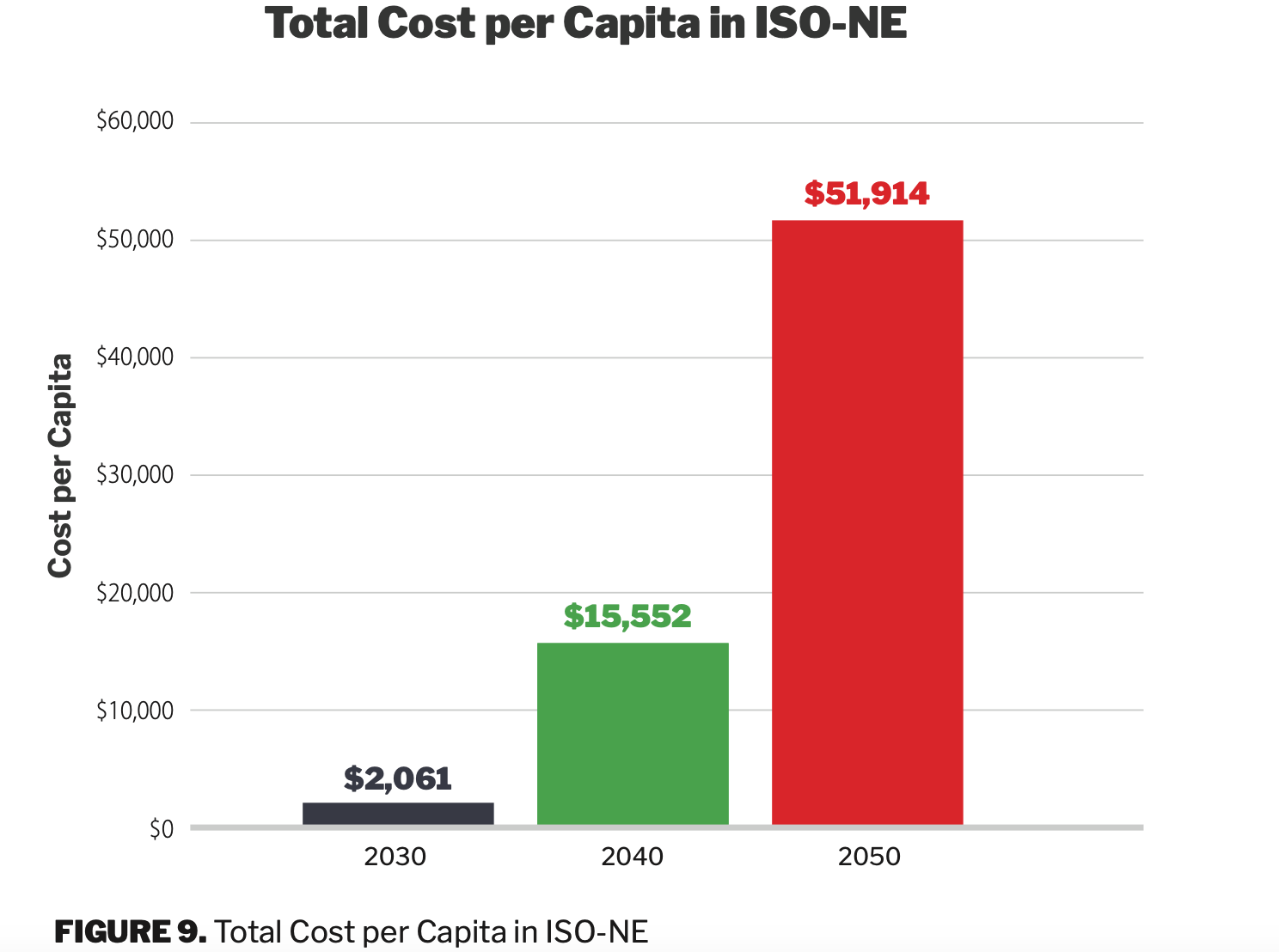
Staggering. Mind boggling. Shocking. Inconceivable. All words no one wants associated with their future energy costs. Yet, that’s what we found when we modeled the cost and reliability impact of the six New England states’ energy policies on the group’s residents within ISO-NE (New England’s regional electricity transmission organization that schedules electrity supply to meet demand).
Key findings of the report The Staggering Cost of New England’s Green Policies:
- An estimated $815 billion additional cost to New England ratepayers by 2050, excluding federal subsidies.
- A required buildout of 225 GW of renewable energy capacity, including offshore and onshore wind, solar, and battery storage.
- Significant risks of prolonged blackouts due to the inherent intermittency of renewable energy sources.
- Doubling of electricity rates, with residential, commercial, and industrial customers facing substantial cost increases.
- Environmental, Social, and Governance (ESG) policies compounding financial burdens by impacting public pension funds and increasing heating costs through premature hydrogen rollout.
New Englanders are tough. They’re accustomed to braving frigid winters – but they may not be prepared for what’s coming over the next decade – seismic shifts to their electricity generating system – that will leave them colder and poorer – if new energy policies are not put in place.
Of the six New England states (Connecticut, Maine, Massachusetts, New Hampshire, Rhode Island, and Vermont), all but New Hampshire have committed to reducing their carbon dioxide emissions by at least 80% by 2050 (Net Zero policies). Our research finds that this decarbonization scheme will create significant economic burdens for consumers and businesses alike, make the energy grid less reliable – especially in major weather events, and offer minimal climate benefits.
The Economic Burden
New England ratepayers can expect to pay an estimated $815 billion more for energy by 2050, excluding federal subsidies. This staggering price tag translates into a doubling of electricity rates, with residential customers paying an additional $99 annually — every year — and commercial and industrial users facing annual increases of $489 and $5,280, respectively. These increases pose a severe financial strain for families and businesses already navigating high living costs.
Grid Reliability Risks
The transition to renewable energy, such as wind, solar, and battery storage, introduces significant reliability challenges. Unlike traditional power plants, renewable sources are inherently intermittent and cannot consistently meet demand, especially during peak winter months. The projected buildout of 225 GW of renewable capacity, including thousands of wind turbines and millions of solar panels, still falls short of ensuring a stable energy supply. Blackouts and prolonged outages could become a reality for New Englanders.
Minimal Climate Impact
Despite these efforts, the climate benefits of New England’s decarbonization policies are limited. The region accounts for less than 0.4% of global emissions, raising questions about the cost-effectiveness of these ambitious goals. The environmental return on investment does not justify the steep economic and social costs.
Policy Solutions
To address these issues, the report advocates for pragmatic reforms. These include lifting nuclear energy moratoriums, which offer a reliable and carbon-free alternative, and enhancing transparency in power purchase agreements to give ratepayers clarity on costs. Additionally, nuclear energy should be allowed to compete equally with wind and solar to ensure reliability.
We suggest the states reconsider decarbonization goals, lift nuclear moratoriums, and enhance transparency in power purchase agreements to ensure reliability, affordability, and sustainability. Otherwise these six states will face staggering costs.