Electricity affordability is not an accident of geography or markets. It’s a function of deliberate state policy choices that influence generation portfolios, infrastructure decisions, and regulatory mandates.
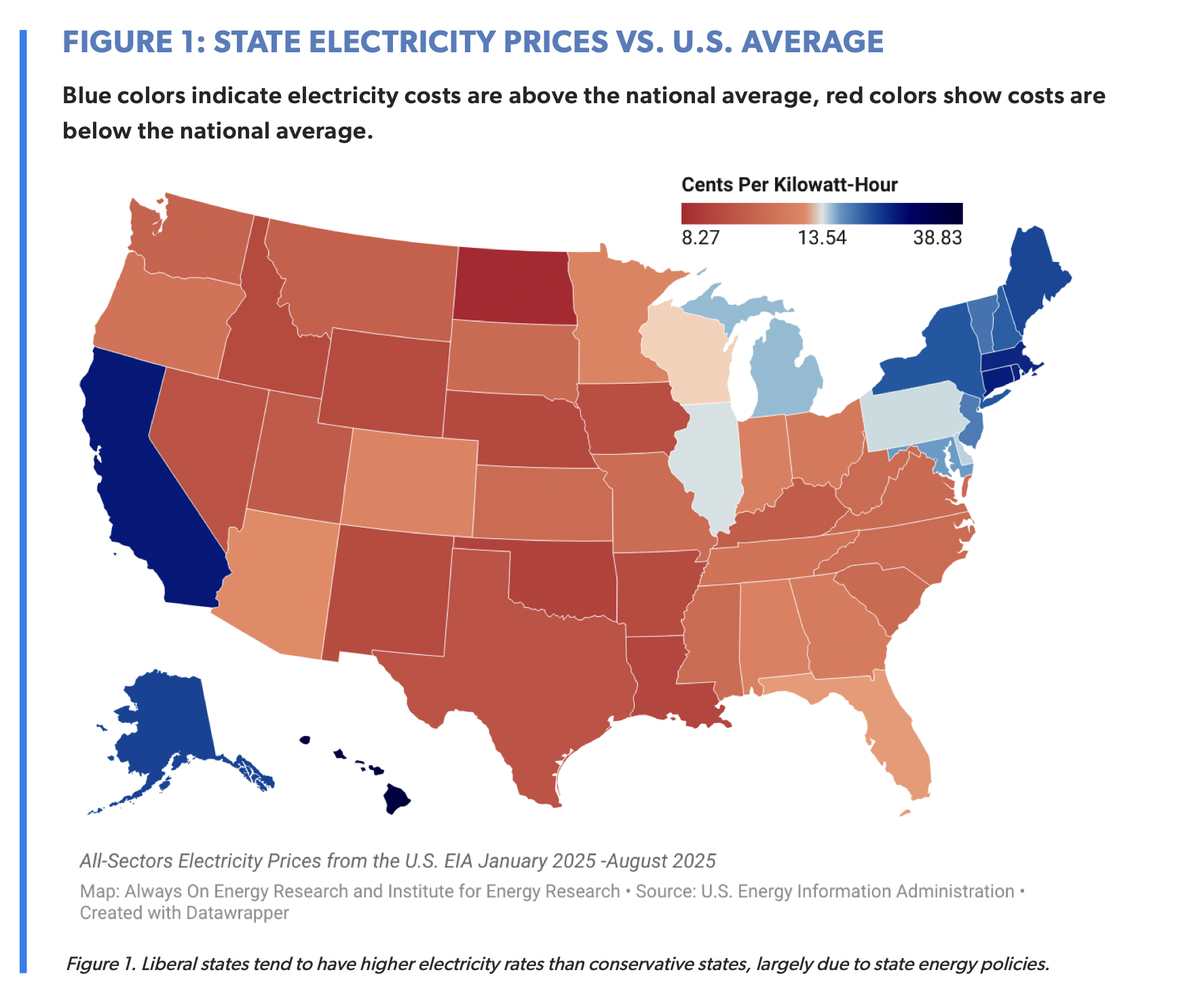
Our Blue States, High Rates study, co-authored with the Institute for Energy Research (IER), shows how state-level energy policy choices drive electricity prices across the United States. Our research finds that 86 percent of states with electricity prices above the national average are reliably Democratic (“blue”) states. In comparison, 80 percent of the states with the lowest electricity prices are reliably Republican (“red”).
Higher costs in blue states are linked to aggressive renewable and carbon-free mandates, clean energy standards, net-metering policies, premature retirements of dispatchable generation, and restrictions on natural gas infrastructure. All of these increase costs for households and businesses. By contrast, many red states prioritize affordable, dispatchable generation and avoid costly mandates, resulting in lower average electricity rates for consumers. The study highlights California, New York, Florida, Louisiana, and Kentucky as exemplars of how contrasting policy frameworks affect affordability and reliability.
We advanced the Blue States, High Rates theme in two opinion editorials.
- Mitch and Isaac pose this question to The Hill readers: “If Democrat policies make energy affordable, why are they backtracking from them?” Blue States, High Rates explains why.
- Isaac and co-author Tom Pyle from IER write in Real Clear Energy that high electricity prices are a choice that blue states make every day.
National Review cited our work in an article highlighting the left’s “hypocrisy problem with energy and affordability,” noting that the left’s rhetoric about lowering costs contrasts with observed price outcomes in states with aggressive clean energy mandates