Claims that wind and solar are the cheapest path to decarbonization rely on the flawed LCOE and exclude reliability costs. That’s why AOER created the Always On LCOE. When the AOER team accounts for the total system costs (Always On LCOE) of wind and solar energy, including backup generation, storage, transmission, and overbuilding required to meet peak demand, the economics change dramatically.
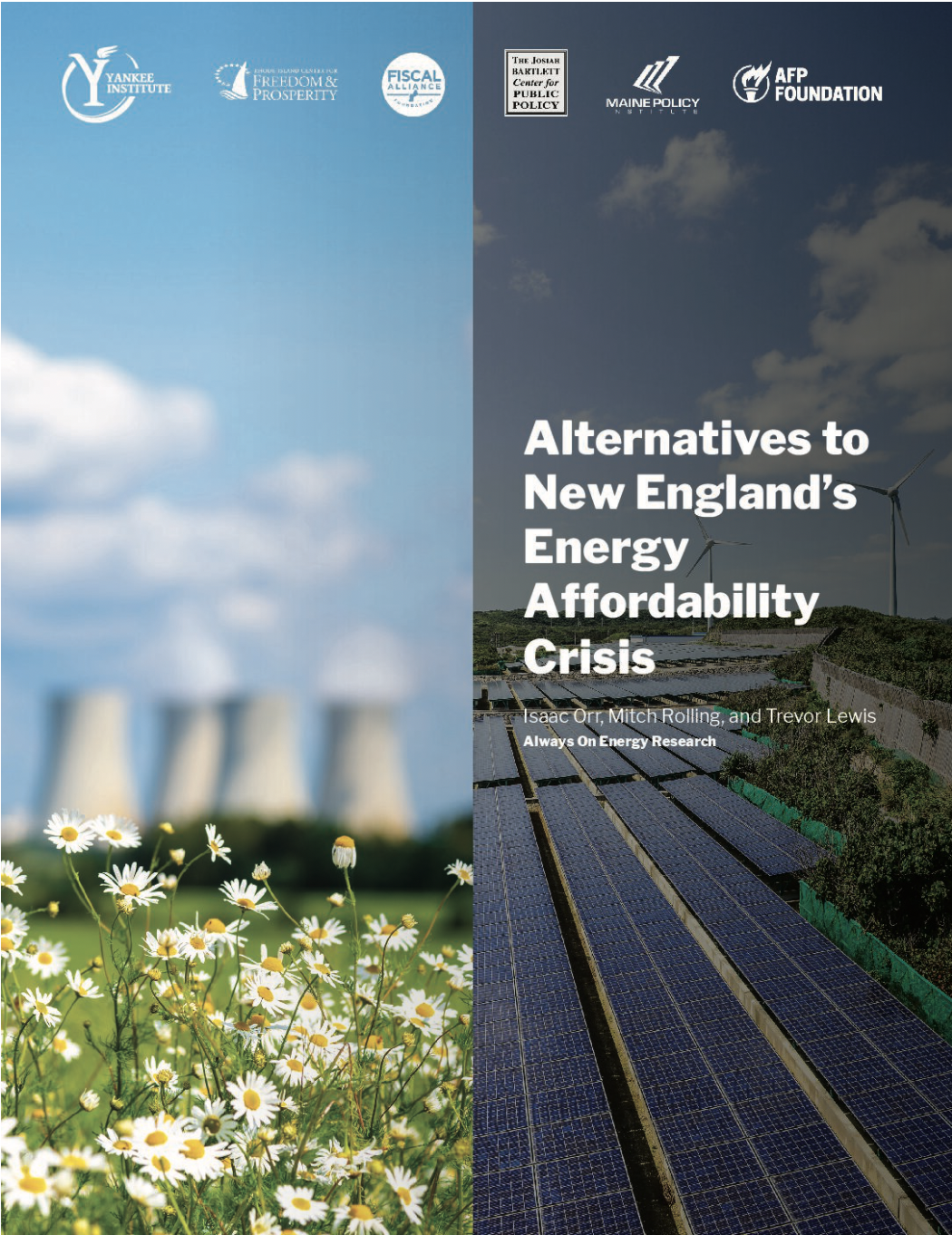
Our latest report on New England’s power system illustrates this point. Net Zero policies that prioritize wind and solar are more fragile and more expensive than policies that rely on nuclear and natural gas. Here’s what we found in Alternatives to New England’s Energy Affordability Crisis:
- When AOER models the Always On LCOE of New England’s decarbonization policies, “cheap” wind and solar soar to $815 billion through 2050.
- Alternatives provide massive savings
- A nuclear-only pathway would cost roughly $415 billion, cutting emissions by over 90 percent.
- A nuclear-plus-natural gas portfolio would save more than $600 billion and provide a 50 percent reduction in GHG emissions.
- Alternatives avoid blackouts that wind and solar cannot.