
On July 20th, 2026, Southwest Power Pool West (SPPW), the newest regional transmission organization (RTO) area in America, declared an Energy Emergency Alert 3, narrowly avoiding rolling blackouts.
According to GridStatus, SPPW’s close call was caused by high demand, exceedingly low wind generation, a forced outage at a 250 MW coal unit, and reduced solar output. In all likelihood, SPPW only avoided blackouts thanks to a massive influx of imports.
In this article, we’ll introduce our readers to Southwest Power Pool’s (SPP) western experiment and show you how it almost ended up in rolling blackouts.
Meet Southwest Power Pool West
SPPW was launched on April 1, 2026, and it is significant because it marks the first time an RTO will operate in both the Eastern and Western Interconnections.
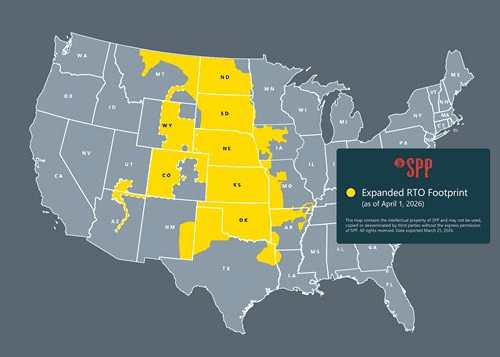
SPP’s western front consists of 25 municipal, federal, cooperative utilities, and investor-owned utilities across Arizona, Colorado, Montana, Nebraska, New Mexico, Utah, and Wyoming. With these additions, SPP now serves 20 million people in all or part of 17 states. You can see the new territory covered by SPPW in the map below.
According to the SPP West Balancing Authority Area Planning Reserve Margin Recommendation report, the new area is tiny by RTO standards, with an expected summer peak demand of 5,251 MW and a winter demand of 4,476 MW. For context, the SPP’s eastern balancing authority has a projected peak load of 57,245 MW.
To serve this demand, the report shows that SPPW relies heavily on coal, natural gas, and hydro power. Coal is the largest source of capacity on this system (24.6 percent), followed by natural gas and hydroelectric power (21.9 percent and 19.6 percent, respectively). Wind and solar constitute 15.6 percent and 12.5 percent of the installed capacity on this system, respectively, with storage accounting for 4.5 percent and 1.1 percent coming from oil.
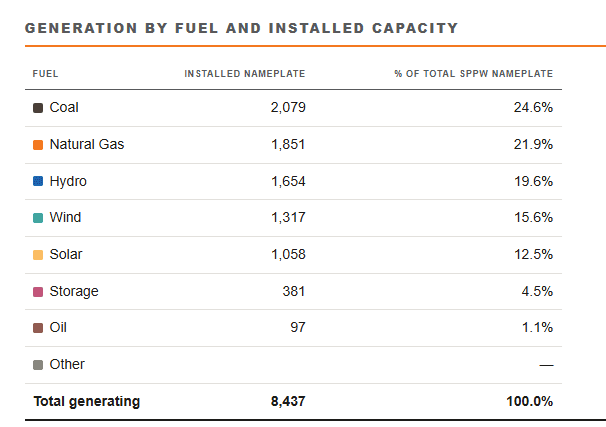
For those of you running the numbers in your head, this should raise red flags because it means that SPPW is relying on 5,681 MW of dispatchable capacity (6,062 MW if you count storage) to meet its projected peak demand of 5,251 MW of peak demand.
This means dispatchable capacity within the SPPW footprint only exceeds its projected peak demand by 430 MW, a 7.6 percent margin, leaving it reliant upon wind, solar, storage, and imports to meet the rest of its capacity safety net.
It Ain’t Easy Going Green
The reliance on wind, solar, storage, and imports may grow in the coming years as companies like the Tri-State power cooperative unwisely seek to shut down their coal plants, like Craig Unit 1, with no new dispatchable gas plant to replace them.
Other companies cited their carbon-free and renewable energy goals as their primary reason for joining SPPW. For example, Jason Frisbie, the General Manager and CEO, Platte River Power Authority stated:
“Actively participating in a fully organized energy market is the first and most significant element of our Resource Diversification Policy. We recognized early on that we could not achieve the noncarbon energy future our owner communities are asking for on our own [emphasis added]. Joining the SPP RTO provides access to a much broader footprint of renewable resources while helping us maintain the reliability and affordability that our communities and their customers expect.”
Mark A. Gabriel, President and Chief Executive Officer of United Power stated:
“Joining the Southwest Power Pool is an important step as our cooperative continues to work toward its vision of the new energy future. Being a market participant will provide the cooperative greater flexibility, access to more renewable resources, and the ability to maximize the co-op’s investments in the power grid – all of which will benefit our members today and into the future. Further, we look forward to all Coloradans benefitting from the depth and responsiveness of the SPP market.”
Unfortunately, these utilities appear to have fallen for the Import Fallacy, or the idea that they can prematurely shut down their coal or natural gas plants, build wind, solar, and battery storage, and rely on imports when their wind or solar isn’t working.
However, the problem with California-style energy policy is that you eventually run out of other people’s electricity, which is what nearly happened on the 20th.
The Close Call
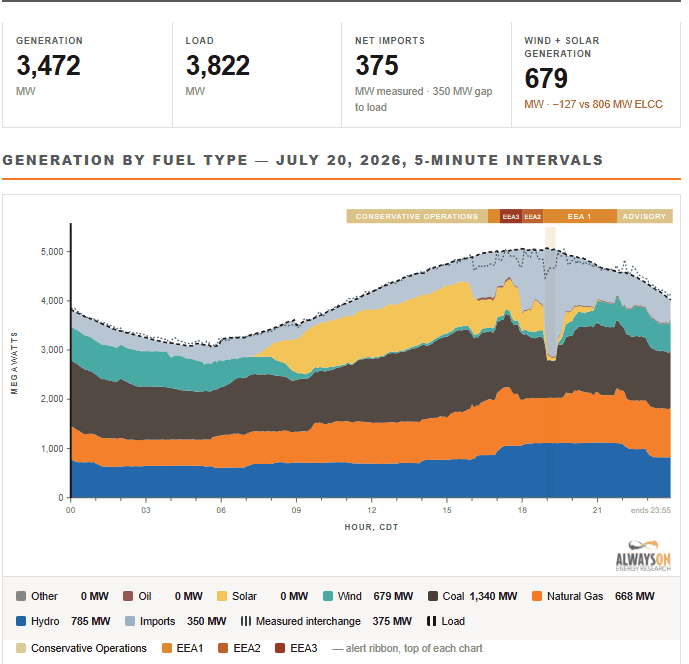
SPPW data show wind production cratered throughout the day, plummeting from operating at over 50 percent of its potential capacity to one percent during its lowest point. The low wind output was one reason why SPPW declared conservative operations at 11 am Central, as wind became a complete non-factor on its system.
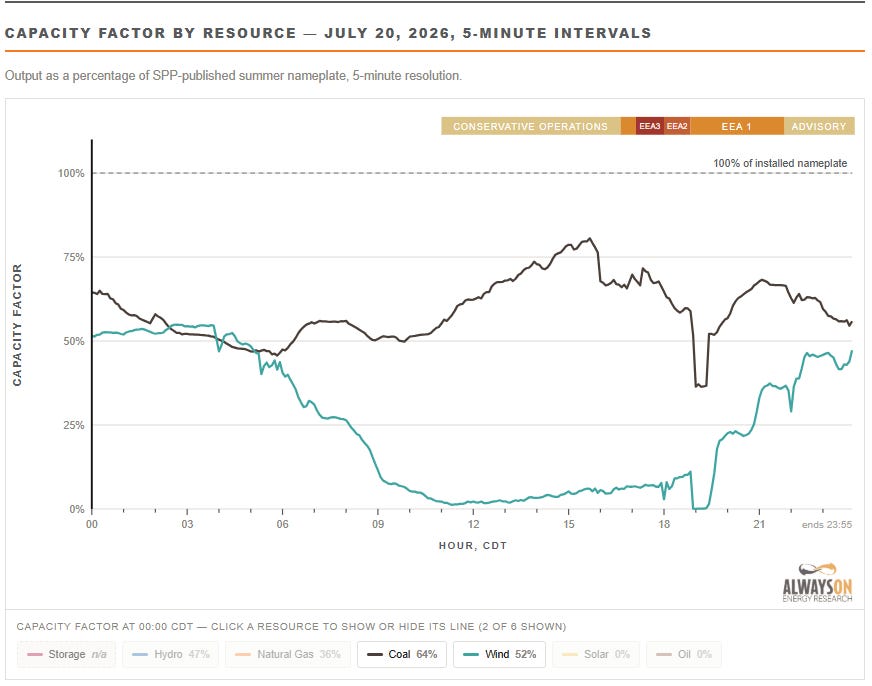
On the other hand, SPPW called on its coal fleet to increase output. Instead of dropping to almost zero, the coal fleet’s capacity factor increased from around 50 percent of its potential output at 6 am up to 81 percent just before the coal unit tripped offline at approximately 4 pm. Even with the trip, the coal generation fared far better than the wind turbines; they were the resource with the highest capacity factor throughout most of the day.
Let’s Talk Reserve Margin
According to the report we cited earlier, SPPW’s recommended reserve margin for the summer is 19 percent in 2027.
As we discussed previously, the region’s thermal and hydro resources only exceed the projected peak demand by 430 MW, or 7.6 percent, leaving the remaining reserve margin to imports, demand response, and wind, solar, and battery storage resources, which you can see in the table below.
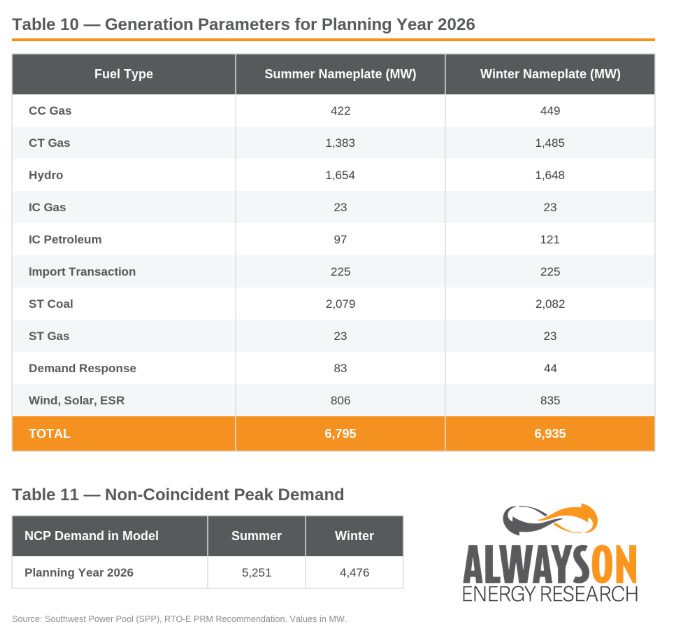
Based on these assumptions, wind, solar, and storage were expected to provide a combined 806 MW of “firm” capacity during the projected summer peak, which is about 30 percent of their nameplate.
SPPW’s five-minute generation data does not show storage discharges, but the available data for 5-minute wind and solar generation show that despite strong solar generation for much of the period, they generally failed to live up to their summer planning standard during the EEA3 event, producing at or above 806 MW just ten percent of the time.
Imports
As you can see from the graph above, imports saved the day for SPPW, at one point accounting for 1,795 MW of 5,042 MW, or 35.6 percent, of total system demand.
SPPW’s ability to import far more electricity than the 225 MW of non-firm imports SPP bakes into its planning reserve calculations allowed it to avoid initiating blackouts.
The data show that the folks at SPP owe the folks at Public Service Company of New Mexico a fruit basket, with the utility nearly matching SPPW’s combined wind and solar output during the EEA3, with help from the direct current ties from SPP East.
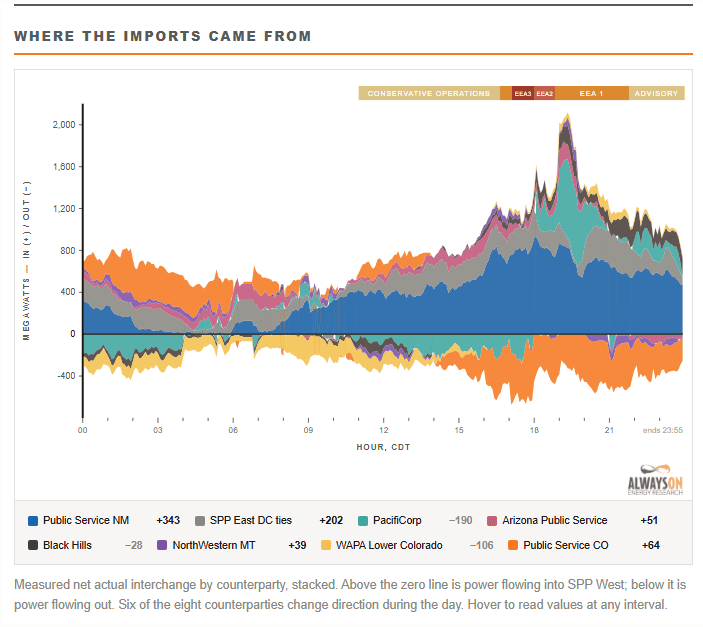
SPPW was incredibly fortunate that other utilities had a square to spare with respect to power imports. Without those imports, the young RTO region would have gotten off to a very rocky start in its first summer.
Conclusion
SPPW had a very close call on July 20th because it does not have enough dispatchable capacity to cover its planning reserve margin, and its members like Tri-State are foolishly planning to make the situation worse by retiring their dispatchable coal plants and replacing them with less reliable resources.
Utilities need to understand that joining an RTO can create efficiencies, but they are not a magical solution that will allow them to shutter their dispatchable resources, build new wind and solar facilities, and provide the imports they need when they need them.
This piece was originally published by Isaac Orr and Mitch Rolling at Energy Bad Boys on Substack.